
 Save
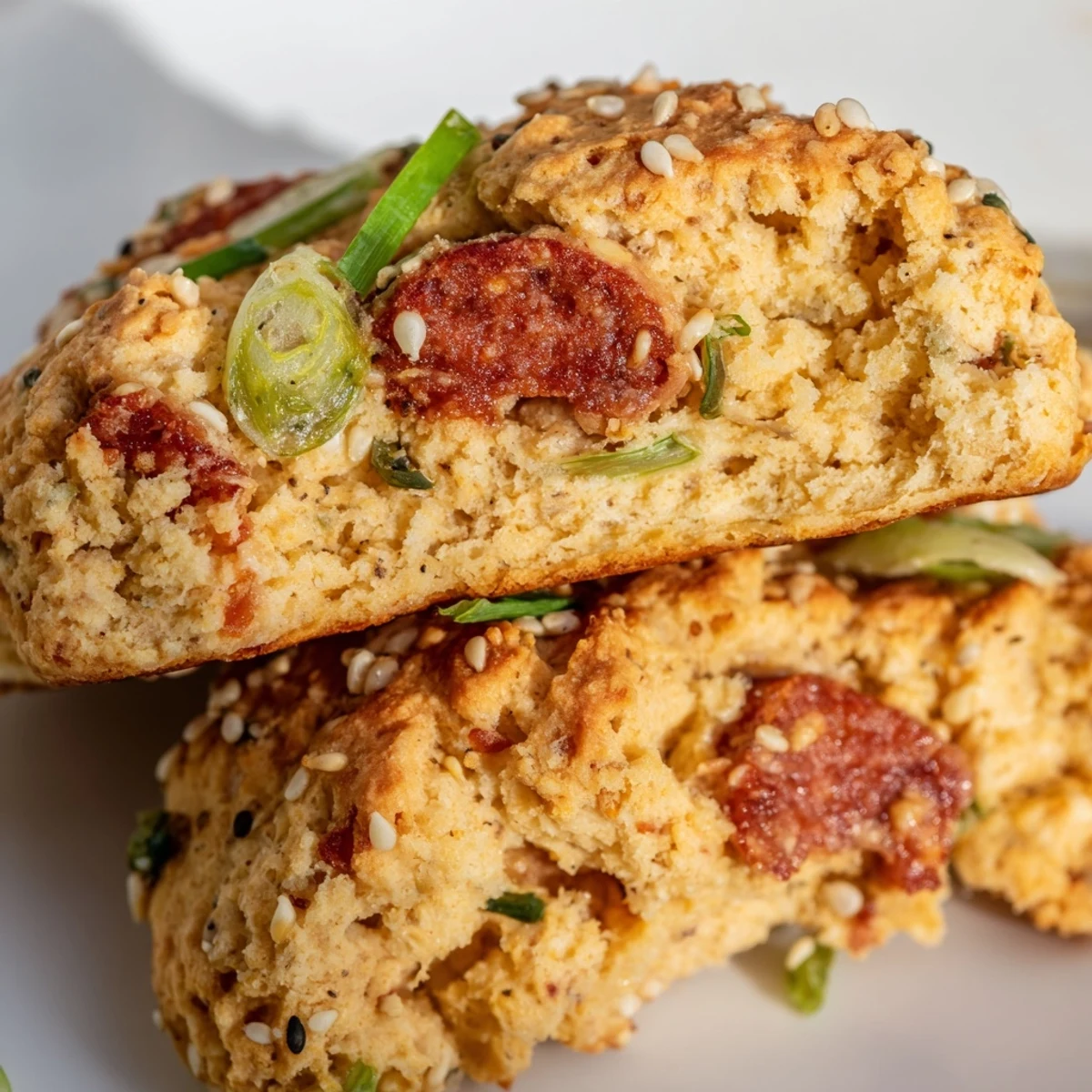
Save These homemade biscuits combine classic Southern baking techniques with savory Chinese sausage for a unique fusion treat. The dough comes together in just 20 minutes, featuring cold butter cut into flour for maximum flakiness. Diced lap cheong adds sweet-savory depth throughout each tender layer, while scallions and optional sesame seeds provide aromatic contrast.
Bake at high heat (425°F) for golden, risen biscuits with crisp exteriors and soft interiors. The folding technique creates distinct flaky layers that hold the sausage distribution beautifully. Enjoy warm from the oven, perhaps with chili crisp or honey butter for extra flair.
Leftovers freeze exceptionally well—simply reheat in the oven to restore that fresh-baked texture. Substitute cooked bacon or ham if Chinese sausage isn't available, though the original's sweet-savory profile is irreplaceable.
The smell of Chinese sausage hitting a hot skillet still takes me back to my aunt's tiny kitchen in San Francisco, where she'd fry up lap cheong for breakfast while telling stories about her bakery days. She was the one who taught me that sweet cured sausage could be absolutely magical inside flaky, buttery biscuits. I've been making this fusion combination ever since, and there's something deeply comforting about pulling these golden beauties out of the oven while that irresistible aroma fills the whole house.
Last winter, during a particularly gloomy weekend, my roommate came home sick and miserable. I made a double batch of these biscuits and the way her face lit up at that first bite of warm, flaky dough studded with sweet sausage was absolutely worth every minute of prep time. We ate them standing up in the kitchen, steam rising into the gray morning light, and agreed this was the best comfort food discovery we'd made in years.
Ingredients
- 2 cups all-purpose flour: The foundation of any good biscuit. I learned that measuring by weight rather than volume makes a huge difference in consistency.
- 1 tbsp baking powder: This gives your biscuits their rise. Make sure it's fresh, otherwise you'll end up with dense hockey pucks instead of fluffy clouds.
- 1/2 tsp baking soda: Works with the baking powder for extra lift and also helps neutralize the acidity in the milk.
- 1/2 tsp salt: Essential for flavor balance, especially since the sausage is already quite salty on its own.
- 2 tsp sugar: Just enough to bridge the gap between the savory elements and the sweet sausage.
- 1/2 cup unsalted butter, cold, diced: Cold butter is non-negotiable here. I keep mine in the freezer for 10 minutes before cutting it in.
- 3/4 cup cold whole milk: The fat in whole milk creates a more tender biscuit. I've tried low-fat versions and they're just not the same.
- 1 large egg: For brushing on top, this creates that gorgeous golden bakery shine that makes them look professional.
- 3 Chinese sausages (lap cheong), finely diced: The star of the show. Look for sausages that are firm and slightly translucent when held to light.
- 2 scallions, thinly sliced: Fresh onion flavor cuts through the richness and adds beautiful green specks throughout.
- 1 tbsp sesame seeds: Totally optional, but I love the subtle nutty flavor they add and how they make the biscuits look extra special.
Instructions
- Get everything ready first:
- Preheat your oven to 425°F and line a baking sheet with parchment paper. I learned the hard way that trying to prep while sausage is sizzling leads to burned food and panic.
- Crisp up the sausage:
- Cook the diced Chinese sausage in a skillet over medium heat for 2 to 3 minutes until fragrant and lightly browned. Drain the excess fat and let it cool completely before adding to the dough.
- Whisk your dry ingredients:
- In a large bowl, combine flour, baking powder, baking soda, salt, and sugar. I do this with a fork to make sure everything is evenly distributed.
- Cut in the butter:
- Add cold diced butter to the flour mixture. Use a pastry cutter or your fingertips to work it in until you have coarse crumbs with some pea-sized butter pieces remaining.
- Add the good stuff:
- Stir in the cooled sausage, scallions, and sesame seeds. Make sure they're evenly distributed so every biscuit gets plenty of flavorful bits.
- Bring it together:
- Pour in cold milk and mix gently until a shaggy dough forms. Stop as soon as everything comes together, even if it looks messy.
- Create flaky layers:
- Turn dough onto a floured surface and pat into a 1-inch thick rectangle. Fold in half, pat out, and repeat once more. This simple step creates those beautiful layers.
- Cut and arrange:
- Cut rounds with a 2.5-inch biscuit cutter, pressing straight down without twisting. Place close together for soft sides or spaced for crispy edges.
- Add the shine:
- Brush tops with beaten egg if you want that gorgeous golden finish. I skip this when I'm in a rush, but it does make them look bakery-perfect.
- Bake to perfection:
- Bake for 16 to 18 minutes until deeply golden brown on top. The smell will be absolutely incredible when they're done.
- Rest briefly and serve:
- Cool on the baking sheet for just 5 minutes before serving warm. This short rest helps set the crumb so they don't crumble apart.
 Save
Save These biscuits have become my go-to whenever friends visit, and there's something magical about breaking them open while still warm and watching steam escape from those tender layers. Last summer I made them for a potluck and someone actually asked for the recipe before even taking their first bite.
Making Them Ahead
You can cut the raw biscuits and freeze them on a baking sheet, then transfer to a bag once solid. Bake from frozen, adding just 2 to 3 minutes to the cooking time. This has saved me so many times when I need fresh baked goods but don't want to start from scratch.
Serving Ideas
While these are absolutely perfect on their own, I love serving them with a small bowl of chili crisp for those who want extra heat. A pat of salted butter melted into a warm biscuit is also incredibly decadent, especially when the sausage juices start to mingle with it.
Storage And Reheating
Store cooled biscuits in an airtight container for up to 3 days at room temperature, or freeze for up to 1 month. The best reheating method I've found is 5 minutes in a 350°F oven, which brings back most of the freshly baked texture.
- Never reheat in the microwave unless you want sad, chewy biscuits
- If freezing, wrap individually for easier thawing
- Room temperature biscuits are perfectly fine, but they're definitely better warm
 Save
Save I hope these become a staple in your kitchen like they have in mine. There's something special about recipes that bring together different traditions and create something entirely new.
Recipe FAQs
- → What makes Chinese sausage special in biscuits?
-
Chinese sausage (lap cheong) brings a unique sweet-savory profile that infuses throughout the dough. The cured pork flavor balances beautifully with buttery biscuit dough, creating depth you won't get with regular breakfast sausage.
- → Can I make these ahead of time?
-
Absolutely. Cut unbaked biscuits can be frozen on a baking sheet, then transferred to a storage bag. Bake from frozen, adding 2-3 minutes to cooking time. Already baked biscuits freeze well for up to one month and reheat beautifully in a 350°F oven.
- → Why fold the dough multiple times?
-
Folding creates distinct flaky layers by distributing butter pockets throughout the dough. Each fold stacks layers, resulting in that signature biscuit texture with tender crumb and slight separation between layers when baked.
- → What can I serve with these biscuits?
-
They're excellent on their own, but try pairing with chili crisp for heat, honey butter for sweet contrast, or soft-scrambled eggs for a complete breakfast. The subtle sweetness also complements sharp cheddar or cream cheese spreads.
- → How do I know when they're done baking?
-
Look for deep golden brown tops and bottoms. The biscuits should feel light when lifted and have a hollow sound when tapped on the bottom. An instant thermometer inserted into the center should read 200-205°F.
- → Can I use self-rising flour instead?
-
Yes, substitute self-rising flour for the all-purpose flour, baking powder, and salt. Keep the baking soda and proceed with the recipe as written. You may need slightly less milk since self-rising flour absorbs differently.