 Save
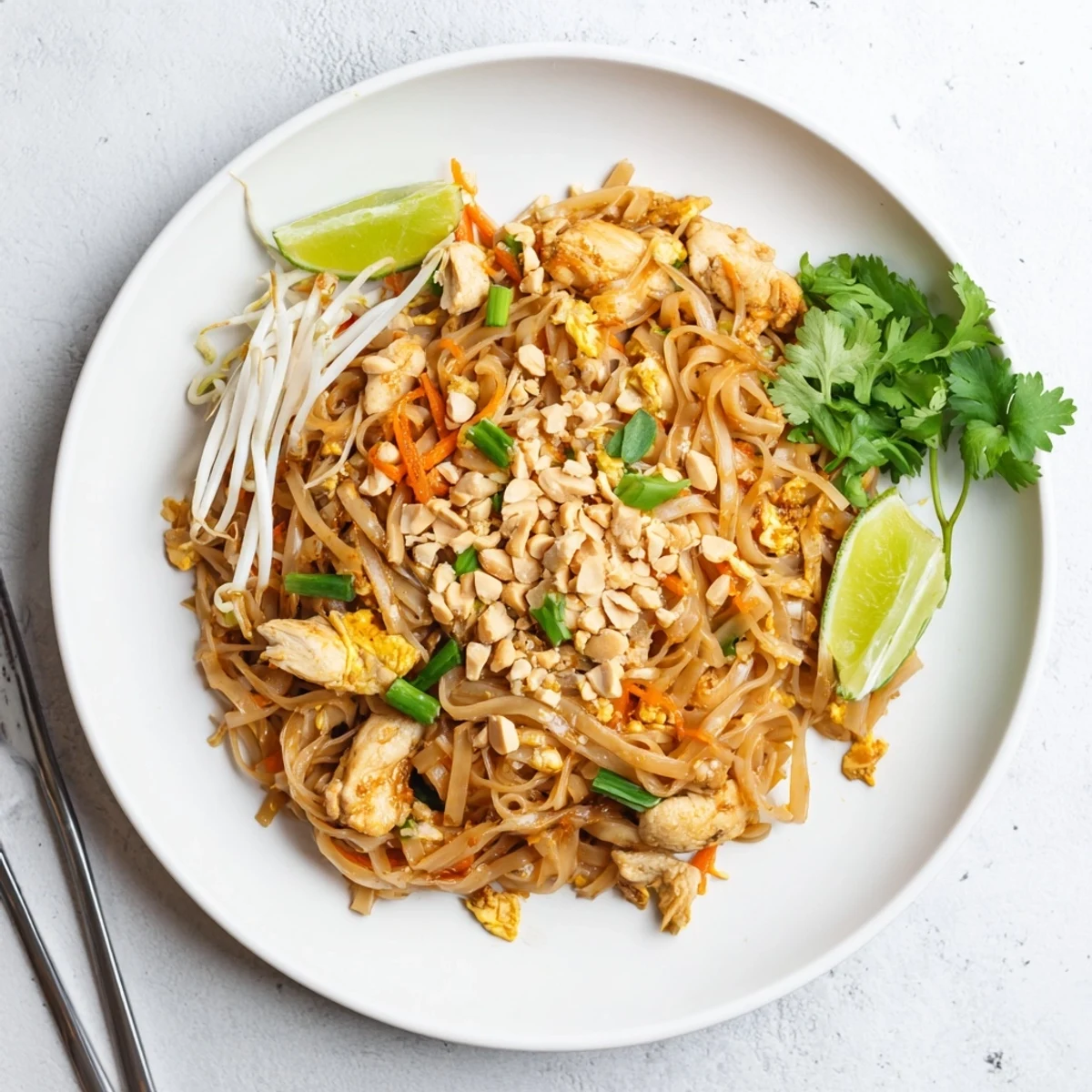
Save This beloved Thai street food transforms wide rice noodles into a tangy, savory masterpiece. Thinly sliced chicken breast woks quickly alongside aromatic garlic and shallots, while housemade tamarind sauce brings that signature sweet-sour balance.
The technique lies in proper noodle soaking and high-heat stir-frying—noodles should remain slightly chewy, absorbing the complex sauce while retaining texture. Bean sprouts add essential crunch, contrasting beautifully with tender chicken.
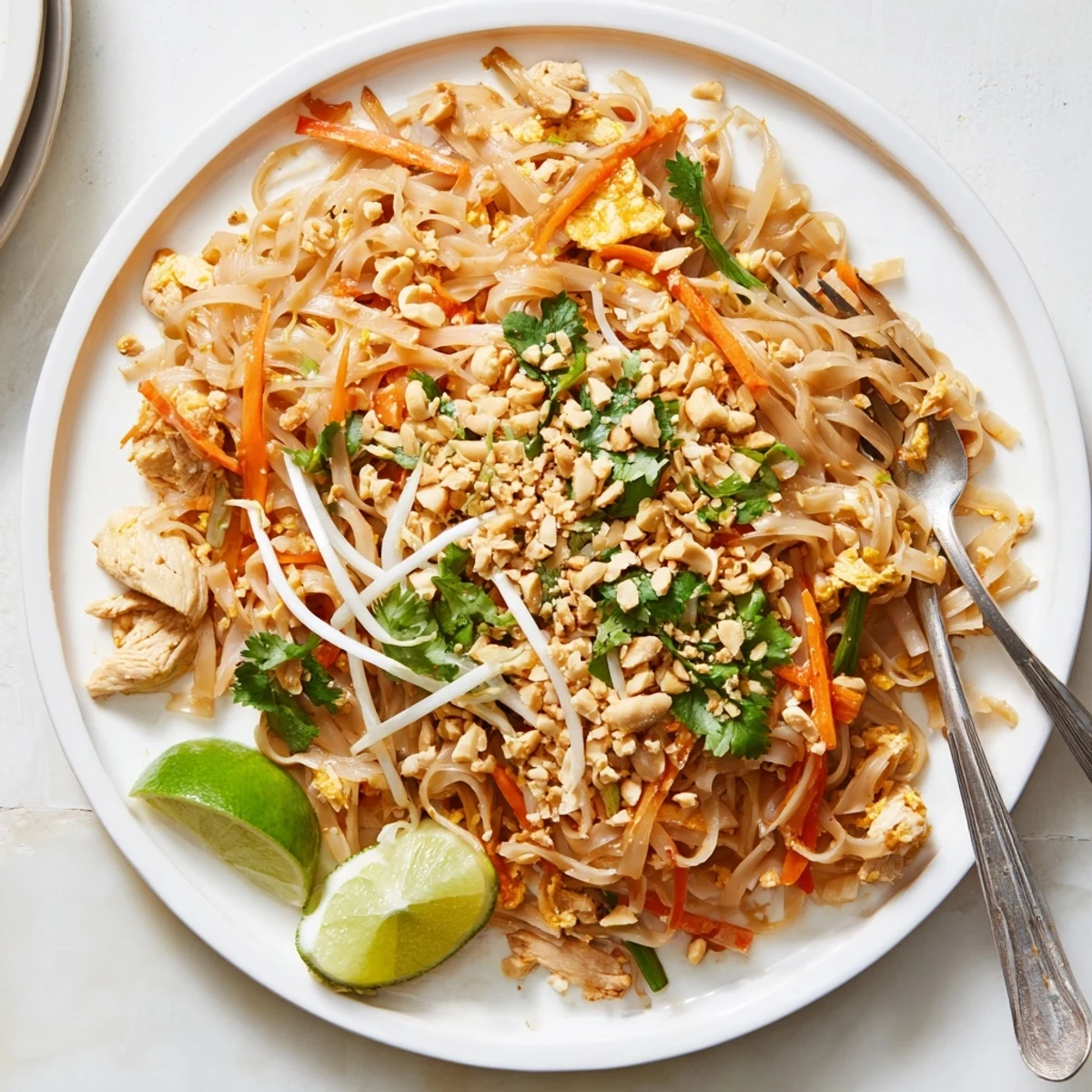
Finish generously with roasted peanuts for richness, fresh cilantro for herbal brightness, and lime wedges to customize acidity. The result transports you directly to Bangkok's bustling night markets.
The steam rising from my first proper pad thai still lingers in memory, that perfect balance of tangy, sweet, and savory hitting my senses all at once. I'd ordered it countless times at restaurants, but watching a street vendor in Bangkok work his wok with practiced ease made me realize this was something worth mastering at home. Now it's become my go-to when friends drop by unexpectedly, the kind of meal that feels impressive but comes together in the time it takes to set the table.
Last winter, my sister came over during a particularly gray week and I decided to attempt pad thai from scratch. We crowded around the stove, taking turns with the tongs and debating whether we'd achieved the right noodle texture. Something about the aromatics hitting hot oil, the way the eggs scrambled into the noodles, made the kitchen feel warmer and more alive than it had in weeks.
Ingredients
- 400 g boneless chicken breast or thighs: Thighs stay juicier in high heat, but breast works if that's what you have on hand
- 250 g dried flat rice noodles: Soaking them properly is crucial, they should bend but still have a slight bite
- 3 tbsp fish sauce: This provides the essential salty depth that soy sauce alone cannot achieve
- 2 tbsp tamarind paste: The star ingredient that gives pad thai its signature sour notes
- 2 tbsp palm sugar: Brown sugar substitutes fine, but palm sugar has this incredible caramel complexity
- 2 large eggs: Room temperature eggs scramble more evenly into the noodles
- 3 tbsp vegetable oil: Divided use keeps ingredients from steaming instead of frying
- 3 garlic cloves and 1 shallot: Mince them finely so they disperse throughout the dish
- 100 g bean sprouts: Add them last so they stay crisp and refreshing
- 60 g roasted peanuts: Chopping them right before serving keeps their oils fresh and aromatic
Instructions
- Prep your noodles:
- Soak rice noodles in warm water for 20 to 30 minutes until they're pliable but still have some resistance when you bend them
- Whisk the sauce:
- Combine fish sauce, tamarind paste, sugar, and soy sauce in a small bowl, stirring until the sugar completely dissolves
- Cook the chicken:
- Heat half the oil in a wok over medium-high heat, add sliced chicken and cook until just done, then remove and set aside
- Sizzle the aromatics:
- Add remaining oil to the wok, toss in garlic and shallot, stir for 30 seconds until fragrant but not browned
- Scramble the eggs:
- Push aromatics to one side, crack eggs into the cleared space and scramble until just set
- Combine everything:
- Add drained noodles and sauce, toss constantly to coat, then return chicken along with bean sprouts and spring onion whites
- Finish and garnish:
- Stir-fry for 2 to 3 minutes until noodles are tender, then serve topped with peanuts, cilantro, lime wedges, and chili flakes
 Save
Save My friend Marco, who claims he can't cook anything beyond toast, made this for his family last month. He sent me a photo of his daughter holding up an empty bowl, sauce smeared across her chin, which honestly might be the highest compliment a dish can receive.
Getting the Sauce Balance Right
The magic of pad thai lies in that sweet, sour, salty trifecta. Taste your sauce before adding it to the noodles, and remember that the flavors will concentrate slightly during cooking. If you're not sure, start with less fish sauce, you can always add more but you cannot take it back.
Noodle Timing Matters
I've learned through slightly mushy disasters that the soaking step is where most people go wrong. The noodles should feel like al dente pasta after soaking, because they'll finish cooking in the sauce. If they're already soft, they'll turn into a glommed-together mass once they hit the wok.
Make It Your Own
Once you've got the basic technique down, pad thai becomes this incredible canvas. Sometimes I add shrimp instead of chicken, or pile on extra vegetables when I need to use up what's in the crisper drawer. The essence is in that sauce and the high-heat cooking method, everything else is flexible.
- Try adding a handful of fresh Thai basil at the end for an aromatic twist
- A drizzle of sesame oil right before serving adds a lovely nutty depth
- Keep extra lime wedges on the table, that hit of acid brightens every bite
 Save
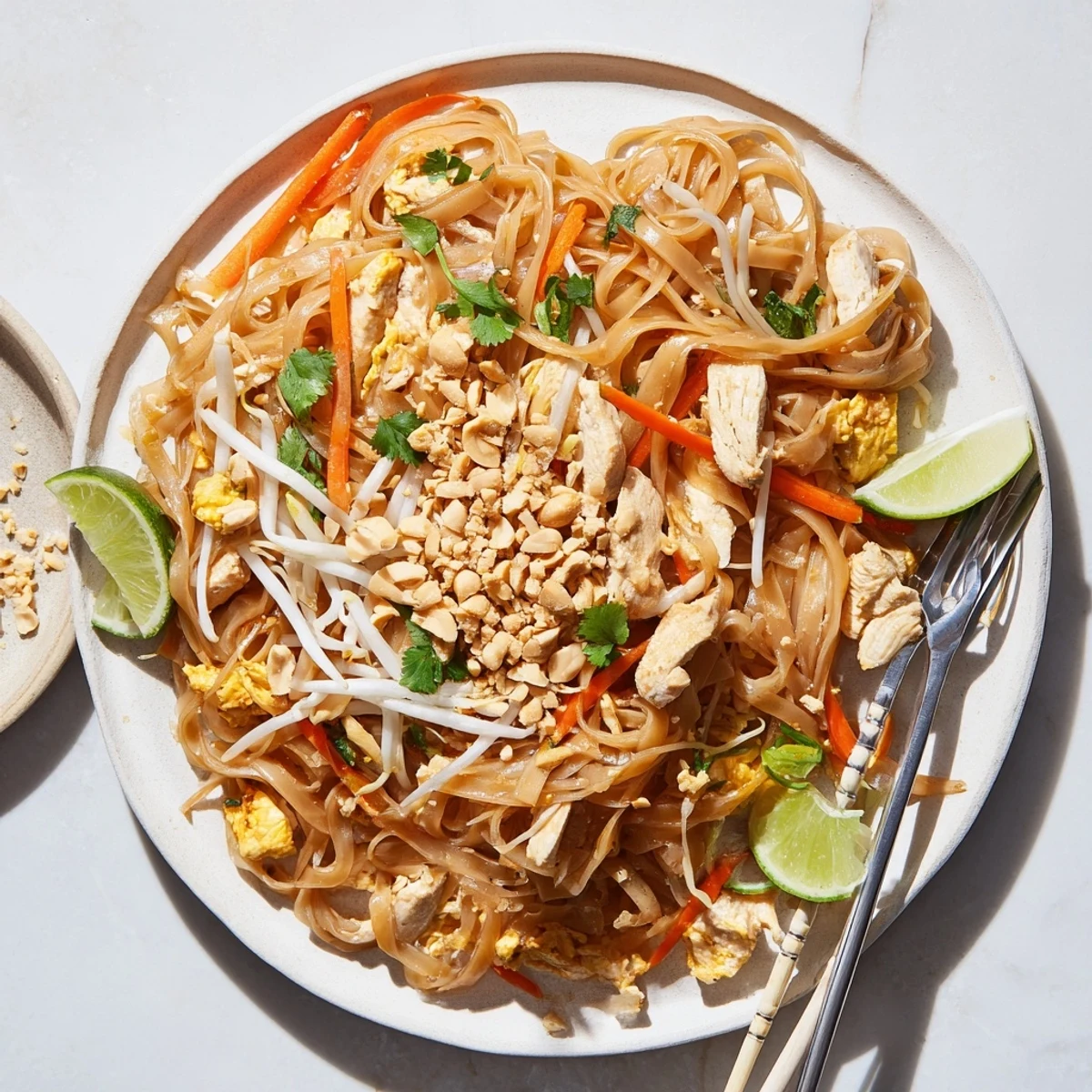
Save There's something deeply satisfying about a dish that comes together so quickly yet tastes like it took hours to perfect. Grab your fork, squeeze that lime, and dig in while it's still steaming hot.
Recipe FAQs
- → How do I prevent rice noodles from sticking together?
-
Soak noodles in warm (not hot) water until pliable but still firm to the touch. Drain thoroughly and toss with a small amount of oil before stir-frying. Work quickly once noodles hit the wok, using tongs to separate strands constantly.
- → Can I substitute tamarind paste?
-
Fresh tamarind pulp or concentrate provides authentic flavor. If unavailable, combine equal parts lime juice and rice vinegar with a pinch of brown sugar. The effect won't be identical but maintains the necessary sour-sweet balance.
- → What's the best cut of chicken for Pad Thai?
-
Thinly slice boneless chicken thighs for juiciness or breast for leaner results. Freeze meat for 20 minutes before slicing against the grain—this yields uniform pieces that cook quickly and stay tender in high heat.
- → Is palm sugar necessary?
-
Palm sugar offers caramel depth with lower sweetness intensity than white sugar. Light brown sugar makes an excellent substitute, providing similar molasses notes. Adjust quantity slightly to taste, starting with less and adding more as needed.
- → How spicy should authentic Pad Thai be?
-
Traditional versions focus on sweet-sour-tangy flavors rather than heat. Serve chili flakes on the side, allowing diners to customize spice levels. A pinch in the sauce adds background warmth without overpowering delicate tamarind notes.
- → Can I make Pad Thai ahead?
-
Pad Thai tastes best immediately—noodles continue absorbing sauce and become soggy. Prep all ingredients in advance: slice chicken, mix sauce, chop vegetables. When ready to serve, the actual cooking takes under 10 minutes at high heat.